Showing posts with label plants. Show all posts

Monday, November 13, 2017

Plant Structure

     Fall is here.  What's falling?  Plants are adapting to the annual environmental temperature change.  Plants are beautiful. Study the plant form.

     The plant body has a hierarchy of organs.  Plants, like most animals, and have organs composed of different tissues, which in turn are composed of cells. A tissue is a group of cells with a common function, structure, or both. An organ consists of several types of tissues that together carry out particular functions. There are a few observable features of the plant structure.

     The three basic plant organs are the roots, stems, and leaves. 

     The basic morphology, or form, of vascular plants evolutionary history as terrestrial organisms is that they inhabit and draw resources from two different environments.  Plants are, simultaneously, above ground, and below ground. Plants must absorb water and minerals from below the ground.  At the same time, plants must also absorb carbon dioxide and light from above the ground. 

     The evolutionary solution to this separation of resources was the development of three basic organs: roots, stems, and leaves. They're organized into a root system and a shoot system.  The root and shoot system is connected by vascular tissue.  Vascular, or plant tissue transports nutrients and water throughout the plant. The xylem transports water, mostly.  The phloem transports nutrients, mostly.  Vascular tissue runs continuously throughout the plant. (http://www.biology-online.org/dictionary/Vascular_tissue)

     The root system is made up of the subterranean bulk of the plant.  Roots are branching organs which grow downward into the soil. Branching occurs irregularly and not from nodes as in stems.
     The shoot system is composed of stems and leaves. With few exceptions, angiosperms (magnoliophyta, flowering plants), and other vascular plants rely completely on both systems for survival.

(https://www.britannica.com/plant/angiosperm)

     Bluebonnets are examples of angiosperms.  Roots of plants are typically non photosynthetic and would starve without the organic nutrients imported from the shoot system. The shoot system depends on the water and minerals that roots absorb from the soil. 

     There are two different kinds of plant shoots.  There are vegetative shoots and the reproductive shoots.  In angiosperms, the reproductive shoots are flowers.  Flowers are composed of leaves that are highly modified for sexual reproduction. 

     The scientific study of plants is called botany (https://www.botany.org/bsa/careers/what_is_botany.php).

     The structure of a plant is very interesting. The season is changing and plants are seemingly decorating for the holidays.

Tuesday, November 12, 2013

Fresh Air from House plants


Have you ever felt like you could suffocate from the lack of fresh air in your home?  There isn’t biological weapon of mass destruction on the news.  You had a technician check the air quality in your home; no unscented gas leaks.  What’s the problem?

Your home needs some house plants.

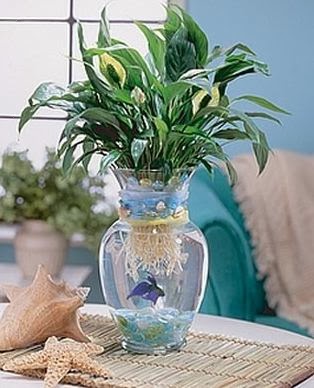
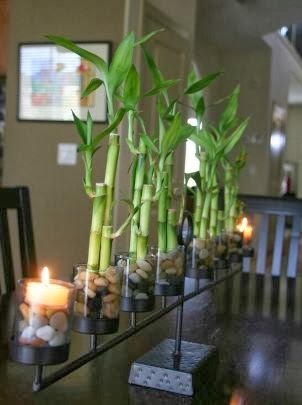
Provide the environment with some natural greenery.  Beautify homes and apartments by decorating with succulents, cacti, ferns, lilies, runners, ficuses, etc. 

Healthy plants are extraordinary additions to your style.  Old plants, though, send a negative message.  Are your plants displaying yellowed leaves, dropped leaves or bears no new growth?  The plant is not receiving proper care.

          “All house plants have different watering, fertilizer and light needs, and understanding the needs of each plant is the key to house plant growth (http://www2.estrellamountain.edu/faculty/farabee/biobk/BioBookPLANTHORM.html)


First of all, locate sufficient light. If your house plant is failing to thrive, it may not be receiving adequate light to stimulate new growth. Add extra light with an incandescent or fluorescent plant light if you don't have enough natural light.

Make sure the environment is temperature efficient, from 58° to 86° F, because too high or too low can cause stunted plant growth.

Keep the plant watered regularly.  Cactus and succulents obviously don’t need much water. Upon the touch, the soil should feel cold, moist or wet.  Soil particles should stick to your finger.  The soil will be crumbly and dusty when it is time to water it.  A rule of thumb is to add water until liquid flows out of the drainage holes in the bottom of the plant container.
 

Miracle gro will provide minor miracles to your plants when utilized correctly.  You should fertilize house plants during their growing season using 20-20-20 fertilizer. Do not fertilize them during the winter since this is their dormant season. Apply the fertilizer following the manufacturer's recommendations based upon the size and type of plant.  Plant fertilizers include hormone.   Plants have five classes of hormones, auxins, bibberellins, cytokinins, abscisic acid, and ethylene.  Auxins promote stem elongation, inhibit growth of lateral buds, and promote cell elongation.
 

Auxins are produced after plant nutrition.  Auxin increases the activity of proton pumps.  The cell wall becomes more acidic.  Wedge-shaped expansins, activated by low pH, separate cellulose micorofibrils from cross-linking polysaccharides.  The exposed cross-linking polysaccharides are now more accessible to cell wall enzymes.  The enzymatic cleaving of the cross-linking polysaccharides allows the microfibrils to slide.  The extensibility of the cell wall is increased.  Turgor causes the cell to expand.  With the cellulose loosened, the cell can elongate.


When the summer months approach, move plants outside during the summer in order to expose them to natural sunlight and air.
 
Do not keep plants outside if temperatures fall below 40 F.


          “How pure is the air you breathe? Plants are the lungs of the earth: they produce the oxygen that makes life possible, add precious moisture, and filter toxins. Houseplants can perform these essential functions in your home or office with the same efficiency as a rainforest in our biosphere (http://www.amazon.com/How-Grow-Fresh-Air-Plants/dp/0140262431).”

Don’t suffocate in your own home.  Get some nice house plants.