Thursday, September 11, 2014

Cost of 9/11/2001

- 8:46am ET - American Airlines Flight 11 (traveled from Boston to Los Angeles) struck the north tower of the World Trade Center in New York City. 

          The explosion looked real,  and it wasn't a movie trailer.   We all remember something different about where we were on that brutally, morbid day in history. Every man and woman thought about,  "What if...". The news channels gave us the complete details.

-10:28am ET - North tower of WTC collapsed. The time between the first attack and the collapse of both World Trade Center towers was 102 minutes.

          "On September 11, 2001, 19 men hijacked four fuel-loaded commercial airlines bound for west coast destinations. That terrorist attack on the United States was orchestrated by al Qaeda leader Osama bin Laden. A total of 2,977 people were killed in New York City, Washington, DC and outside of Shanksville, Pennsylvania, in the worst terrorist attack in U.S. history"( http://www.cnn.com/2013/07/27/us/september-11-anniversary-fast-facts/index.html)

          What was the damage?

          Numerous companies counted the value of lives lost as well as property damage.  There were also lost production of goods and services. No amount seemed reasonable.  The losses already exceeded $100 billion.

          You have to include the loss in stock market wealth -- the market's own estimate arising from expectations of lower corporate profits and higher discount rates for economic volatility -- the price tag approached $2 trillion. 

          Heavy priced items destroyed included:

-Four civilian aircraft valued at $385 million.

-Major buildings in the World Trade Center with a replacement cost of from $3 billion - $4.5 billion.

-Pentagon damage: $1 billion. 

-Cleanup costs: $1.3 billion. 

-Property and infrastructure damage: $10 billion - $13 billion. 

-Federal emergency funds (heightened airport security, sky marshals, government takeover of airport security, retrofitting aircraft with anti-terrorist devices, cost of operations in Afghanistan): $40 billion. 

-Direct job losses amounted to 83,000, with $17 billion in lost wages. 

-The amount of damaged or unrecoverable property hit $21.8 billion. 

-Losses to the city of New York (lost jobs, lost taxes, damage to infrastructure, cleaning): $95 billion.

-Losses to the insurance industry: $40 billion. 

-Loss of air traffic revenue: $10 billion. 

-Fall of global markets: incalculable. 


          The culprit didn't remain at large. After his apprehension,  President Obama commented to the press: “Bin Laden was not a Muslim leader; he was a mass murderer of Muslims,” Mr. Obama said. “Indeed, Al Qaeda has slaughtered scores of Muslims in many countries, including our own. So his demise should be welcomed by all who believe in peace and human dignity.”

          What was the cost of September 11, 2001?

Wednesday, July 30, 2014

Global Warming 2014

     Is Global Warming taking place?

     Well,  have you noticed that since when you were a little kid the summers have been getting closer to record breaking temperatures, every year?

     These dramatic temperature changes aren't an illusion.  These temperature fluctuations are a result of greenhouse gas accumulations. 

     Greenhouse gases, such as, carbon dioxide and methane, accumulate to cause Global warming. Global warming effects the global temperature.  Greenhouse gases build up in the atmosphere.  The Greenhouse effect takes place. 


          Effects

(http://www.effectofglobalwarming.com/)

          Current Global Warming impacts on the environment:

     1. Melting Ice occurring at Earth’s poles. Melting ice: mountain glaciers, ice sheets covering West Antarctica to Greenland, and Arctic sea ice.

     2. Researcher/Tracker Bill Fraser reported the decline of the AdĂ©lie penguins in Antarctica.  The penguin population has fallen from 32,000 breeding pairs to 11,000 in 30 years.

     3. The Sea level has risen faster over the last century.

     4. Migration paths are changing species of butterflies, foxes, and alpine plants.  They have moved farther north or to higher, cooler areas.

     5. Precipitation (rain and snowfall) has increased across the globe, on average.

     6. Spruce bark beetles have boomed in Alaska thanks to 20 years of warm summers. The insects have chewed up 4 million acres of spruce trees.


         Possible future effects

(http://www.effectofglobalwarming.com/)

          Future Global Warming impacts on the environment:

     1. Sea levels are expected to rise between 7 and 23 inches (18 and 59 centimeters) by the end of the century, and continued melting at the poles could add between 4 and 8 inches (10 to 20 centimeters).

     2. Hurricanes and other storms will become stronger.

     3. Species that depend on one anoter will fall out of sync. For example, plants could bloom earlier than their pollinating insects become active.

     4. Floods and droughts will become more common. Rainfall in Ethiopia will decrease by 10 percent over the next 50 years.

     5. Less fresh water will be available. The Quelccaya ice cap in Peru will melt by the year 2100, and leave thousands of people without drinking water or electricity.

     6. Disease occurrences will increase, such as malaria carried by mosquitoes.

     7. Ecosystems will change—some species will move farther north and become more successful.  Some species won’t be able to move, forcing them toward extinction. Since the mid-1980s, with less ice on which to live and fish for food, polar bears have gotten considerably skinnier(Wildlife research scientist Martyn Obbard). Polar bear biologist Ian Stirling has found a similar pattern in Hudson Bay. He fears that if sea ice disappears, the polar bears will as well.


     The Earth will begin to suffer.

     On 16 July, a helicopter spotted this 30-meter-wide hole in Siberia. Many explanations have been put forward for the mysterious void, with its frozen interior walls and lake at the bottom – the current favorite is an underground gas explosion.   It could be the remains of a pingo.

     A pingo is a mound of earth-covered ice up to 70 metres high and 600 meters across. It forms when water freezes under the soil surface, forming an ice lens that pushes the overlying soil up into a dome-shaped hill. Every time the ground freezes and thaws, the pingo grows, and the extra weight pushes its base deeper underground.

     When temperatures warm, the ice supporting the pingo melts. If it all melts the pingo can collapse, leaving a massive hole – playfully called an "ognip". This happened in Siberia.  Such holes may become more common as the world's pingos melt.

     Mountains will change.  Glacial knives, or horns, like the Matterhorn on the border between Switzerland and Italy, sharply cut pointed mountains. They form when several glaciers form around the same mountain.

     Glaciers on mountainsides drag rocks and soil downward, forming an amphitheatre-shaped valley called a cirque. When three or more cirques form on different sides of the same mountain, the result is a pointed mountain with several spine-like ridges, called arĂȘtes, between the cirques.

     When they first form, glacial horns are hidden by ice, but if the glaciers melt they reveal the dangerous-looking sculpted peaks. Most of Earth's existing glacial horns formed during the last ice age. As global warming melts glaciers, we will see more glacial horns emerge.

      Mountain climbing will become increasingly more dangerous.  Mountaineers on summer climbs often struggle to pass randklufts: large crevasses or gaps between a glacier or snowfield and the steep rock of the mountain it rests against. A randkluft forms when the rock face warms from underneath, melting the snow on its surface. They can be very dangerous, particularly in the summer when they become deeper and wider.

     Randklufts are normally confined to relatively low-lying glaciers, but as global temperatures rise they will form higher up. The low-lying randklufts will become increasingly treacherous until they melt away entirely.

     Nature will get confused.  Unlike crop circles, irregular stone patterns are no hoax. A stone circle begins to form in autumn, when daily freeze-thaw cycles cause a lens-shaped pocket of ice to form under the soil. The lens grows as water trickles in, pushing the earth up and forming a mound on the surface. Larger sediments roll off the mound, collecting around the edges, while the finer sediments in the middle settle, leaving a distinctive stone ring.

     When many rings neighbor each other they form polygons. On steep slopes this process forms stone stripes.  

     As the Earth warms, regions that were once frozen year-round will start undergoing freeze-thaw cycles, so more stone circles will emerge. However, we may see fewer circles forming in regions that warm so much they no longer freeze at all.

     We will experience more ice wedge polygons.  An ice wedge is a crack in the ground that forms when a narrow piece of ice extends several meters down into the ground. When the ice melts in summer, more water seeps into the crack, so when it freezes again it gets wider. When many of these cracks form in a single region, they can divide the surface into regular polygonal pieces.

     Ice wedge polygons need freezing winters to form, but they also need a summer thaw, and warmer summer temperatures could allow areas further north to experience that.

     Glaciers will move.  Glaciers leave behind a lot of rock and soil debris, called moraine, when they melt. Moraines can act as dams for the melt-water from the lost glacier, creating moraine-dammed glacial lakes.  They look calm, but moraine-dammed lakes are unstable. Given the appropriate trigger they burst, and torrents of water up to 50 meters deep escape. Peak flow rates can reach 15,000 cubic meters per second. The floods that follow will be devastating.  These floods can happen anywhere that has glaciers, but central Asia, South America's Andes and Europe's Alps are at greatest risk.

     Increasing numbers of moraine-dammed lakes have been seen over the past century as glaciers have retreated. The associated floods may also become more common.

      Now, you can reminisce about the “old days”, when you were little.  The summers have been getting closer to record breaking temperatures, every year?

     You realize that this isn’t an illusion, and these temperature changes are a result of greenhouse gases. G.H. gases, carbon dioxide and methane, overload in the atmosphere causing Global warming.  

Global Warming is a dramatic climate change, and is becoming an environmental and humanitarian crisis.

Thursday, June 26, 2014

Define: Commodities Investments

     How long has your money dictated to you where it prefers to reside?

     Is that fine with you?  Take control.  Become a monster by learning to properly invest your money.

     Make your money make money.

    First of all, we are discussing the action or process of investing money for profit or material for a result.  Investing can also be defined as the surrounding of a place by a hostile force in order to besiege or blockade it.

     You might ask, 
"Where could a beginner begin? "

     Gold!

Commodity [ kuh-mod-i-tee ]
noun [plural com·mod·i·ties.]

1. an article of trade or commerce, especially a product as distinguished from a service.
2. something of use, advantage, or value.
3. any unprocessed or partially processed good, as grain, fruits, and vegetables, or precious metals.

     Yes, by definition, it is a fact, gold is a commodity.

     Interestingly, commodities of food, energy or metals, are an important part of everyday life. Commodities can be an important way for investors to diversify beyond traditional stocks and bonds.

"What is a traditional stock, and bond?"

     As an investor, stocks and bonds are part of a variety of options to choose from.  The investment you select reflects your financial goals, investment preferences, and tolerance for risk.  Stocks and bonds represent traditional investments.  Traditional means that you put your money down and hold on. Although you want to make changes as necessary to protect your investment, these types of investments can add stability to more aggressive — and riskier — investment strategies.  For example,  some risks accompany trading and hedging.
    
     Investing in stocks is great. When you buy stock, you’re buying ownership in a corporation, or company. The benefit is a mutual profit.  Normally, investors buy stocks and hold them for a long time, making decisions along the way about reallocating investment capital as financial needs change, selling underperformers, and following a variety of advice tactics.

     You want to make sure that your stock portfolio is carefully balanced among the different types of stocks (growth, value, domestic, international, etc.) and your other investments.

          "A well-balanced traditional portfolio (which includes stocks and long-, short-, and intermediate-term bonds) generally offers a steady return of between 5 and 12 percent, depending on the specific investments and the amount of risk you’re willing to assume.(http://finance.zacks.com/investing-for-beginners/)"

"Investing in bonds is traditional,  too, right?"

     To raise money, governments, government agencies, municipalities, and corporations can sell bonds. When you buy a bond, you’re essentially lending money to this entity for the promise of repayment in addition to a specified annual return. In that sense, a bond is really nothing more than an IOU with a serial number. Some people, to sound impressive, call bonds debt securities or fixed-income securities.

     Although some entities are more reliable than others, bonds generally offer stability and predictability well beyond that of most other investments. Because you are, in most cases, receiving a steady stream of income (the annual returns, for example), and because you expect to get your principal back in one piece (at the end of the bond’s life), bonds tend to be more conservative investments than stocks, commodities, or collectibles.

"Okay,  let's look at commodities."

     It used to be that most people did not invest in commodities because doing so required significant amounts of time, money and expertise. Today, there are a number of different routes to the commodity markets, and some of these routes make it easy for even the average investor to participate.

"What about the Futures Market?"

     A popular way to invest in commodities is through a futures contract. A futures contract is an agreement to either buy or sell an asset on a publicly-traded exchange. The asset is usually a commodity, a stock index or a currency. The contract specifies when it will be delivered and at what price. Most contracts specify that the asset must actually get delivered, although some allow a cash settlement instead. Most contracts are paid off before the delivery date. Futures are available on commodities such as crude oil, gold and natural gas, as well as agricultural products such as cattle or corn.

     Most of the participants in the futures markets are commercial or institutional users of the commodities they trade. These hedgers may use the commodity markets to take a position that will reduce the risk of financial loss due to a change in price. Other participants, mainly individuals, are speculators who hope to profit from changes in the price of the futures contract. Speculators typically close out their positions before the contract is due and never take actual delivery of the commodity itself.

     Investing in a futures contract will require you to open up a new brokerage account, if you do not have a broker that also trades futures, and to fill out a form acknowledging that you understand the risks associated with futures trading.

          "Each commodity contract requires a different minimum deposit, depending on the broker, and the value of your account will increase or decrease with the value of the contract. If the value of the contract goes down, you will be subject to a margin call and will be required to place more money into your account to keep the position open. Due to the huge amounts of leverage, small price movements can mean huge returns or losses, and a futures account can be wiped out or doubled in a matter of minutes.( http://www.finra.org/Investors/InvestmentChoices/P005912)"

     Most futures contracts will also have options associated with them. Options on futures contracts still allow you to invest in the futures contract, but limit your loss to the cost of the option. Options are derivatives and usually do not move point-for-point with the futures contract.

"Okay,  let me see the stock part."

     Many investors looking for a commodity play use stocks, which are less prone to volatile price swings than the futures market. Stock investors need to do some research to help ensure that a particular company is a good investment as well as a good commodity play.  Oil companies allow investors to select from drillers, refiners, tanker companies or diversified oil companies. Stocks are easy to buy, hold, trade and track, and it is possible to play a particular sector.  Stock options, which require a smaller investment than buying stocks directly, are another way to invest in commodities. While risk is limited to the cost of the option, the price movement will not usually directly mirror the underlying stock.

"What are ETFS and ETNs?"

     Exchange traded funds (ETFs) and exchange traded notes (ETNs), which trade like stocks, allow investors to participate in commodity price fluctuations without investing directly in futures contracts.  Commodity ETFs usually track the price of a particular commodity or group of commodities that comprise an index by using futures contracts, although a few back the ETF with the actual commodity held in storage.  ETNs are unsecured debt designed to mimic the price fluctuation of a particular commodity or commodity index, and are backed by the issuer. A special brokerage account is not required to invest in ETFs or ETNs.

"Can we utilize Mutual Funds?"

     While mutual funds cannot invest directly in commodities, they can invest in stocks of companies involved in commodity-related industries, such as energy, agriculture or mining. Like the stocks they invest in, the fund shares may be affected by factors other than commodity prices, including stock market fluctuations and company-specific risks.

     In conclusion, there are different types of commodity investments for novice and experienced traders to consider. Although commodity futures contracts provide the most direct way to participate in price movements, other types of investments with varying risk and investment profiles also provide exposure to the commodities markets. The key is to invest with the tool that works best for you.

     Rely on accurate research tactics,  and fact based investment strategies.

     Have fun; make money, money.

Wednesday, May 21, 2014

Wild Beauty

There are five major kingdoms of living things: the kingdom Monera, the kingdom Protista, the kingdom Fungi, the kingdom Plantae, and the kingdom Animalia. The kingdom Animalia has over one million species that share certain characteristics. Most animals fall into this category.

Living organisms in the Animalia kingdom are all multicellular, meaning they have more than one type of cell. They do not have rigid cell walls, but rather have permeable membranes surrounded by fluid.

Members of the kingdom Animalia are heterotrophs, meaning they get nourishment from other organisms rather than manufacturing it themselves (as in photosynthesis).

Humans are underneath the kingdom Animalia.  We know why we dominate the kingdom.  What makes the rest of the kingdom deserve to be ranked along side of us?

Beasts are wonderful in a variety of ways.  Their senses are amazing.

Think of the term alligator skin as a compliment: It’s extraordinarily sensitive to minute changes in vibration, which helps locate prey.

Scientists who have studied crocodiles and alligators have taken note of these spots, which they have labeled “integumentary sensor organs” or ISOs (http://jeb.biologists.org/).  A Graduate Student named Duncan Leitch found that these sensory spots are connected to the brain through the trigeminal ganglia, the nerve bundle that provides sensation to the face and jaw in humans.  He also found a diverse collection of “mechanoreceptors:” nerves that respond to pressure and vibration. Some are specially tuned to vibrations in the 20-35 Hertz range, just right for detecting tiny water ripples.  Their finding that the most heavily wired ISOs are located in the mouth near the teeth suggests that the touch sensors help the animals identify the objects that they catch in their jaws. The sensors also appear to provide the sensitivity that female alligators and crocodiles need to delicately break open their eggs when they are ready to hatch and to protect their hatchlings by carrying them in their jaws, the same jaws that can clamp down on prey with a force of more than 2,000 psi.

Alligators are touchy, but the platypus is more the feely type. The only mammal with electroreception, it uses sensors in its bill to detect electrical impulses sent out by prey in murky water.

Electroreception conferred by this “bill sense” explains the platypus’s accurate navigation through light-limited areas. This idea was first suggested when pores on the bill skin demonstrated morphological similarities to the ampullary electroreceptors in electric fish (Pettigrew 1999). Ampullary electroreceptors allow response to low-frequency electric signals that are generated by animal nerves and hearts and it was theorized that the bill functions the same way (Sherwood 2004).   Platypus electroreception was first demonstrated in Australia and detection strengths were measured at 300 ÎŒV per cm. Electroreceptive afferents, or sensory input, from the trigeminal nerve described earlier by Home were also later measured to be comparable to that of electric fish (Pettigrew 1999)http://www.naturalnews.com/039948_earthquakes_ant_colonies_premonition.html#


Redwood Ant
Researchers believe electromagnetism may help red wood ants sense imminent earthquakes in time to evacuate their mounds. Someday these creatures may be part of geologic threat-detection systems.

Tests carried out by geobioscientist Gabriele Berberich show that the red wood ants detect changes in environmental gas emissions by using their unique chemoreceptor cells. These cells allow the ants to sense changes in carbon dioxide levels. The ants also have built in radars called magnetoreceptor cells. These help them detect changes in the electromagnetic field.

Elephants, too, are acutely aware of vibrations. They use seismic activity generated by their trunks and feet to communicate with one another about predators, territory and mating preferences.

Thunderstorms and earthquakes produce vibrational cues; these may be used by elephants in order  to attract them to water or avoid earthquakes.  Elephants produce low-frequency vocalizations at high amplitudes such that they couple with the ground and travel along the surface of the earth.  Direct percussion can produce a much stronger signal than airborne vocalizations that couple with the ground, as shown in the Asian elephant.  However, the power that an animal can couple into the ground at low frequencies is related directly to its mass.  Seismic energy transmits most efficiently between 10 and 40 Hz. This is the range in which elephants may communicate seismically.

Star-nosed moles have 22 tiny trunks containing a total of nearly 100,000 nerve fibers — six times as many touch receptors as on a human hand. As the mole burrows, the tentacles sweep ahead like a high-speed broom, faster than a human eye can detect.

Biologist Kenneth Catania of Vanderbilt University, who has been studying the unusual mole, Condylura cristata, since his graduate student days at the University of California at San Diego, recently discovered that star-nosed moles have the odd habit of blowing bubbles underwater through their nostrils. It’s not mere play. Using a high-speed camera, Catania filmed the moles as they created the bubbles — at a rate of between 5 and 10 bubbles per second, or about the same speed at which other rodents sniff — and found that most of the bubbles are immediately sucked back into the nose. He also discovered that the moles aim their bubbles at specific targets; they’ll blow out a bubble to touch the surface of an object, such as a piece of an earthworm (a star-nosed mole delicacy) or a small fish. “When these bubbles come into contact with an object, it is almost inevitable that odorant molecules” — those that impart smell — “will mix with the air and be drawn into the nose when the bubble is inhaled,” Catania says. That means, he says, that the mole uses the bubbles to smell. The finding came as a big surprise to Catania and other scientists. (http://www.pbs.org/wnet/nature/episodes/the-beauty-of-ugly/star-nosed-moles/428/)

Above ground, wolves have a sense of pitch. Not wanting to lose their voice in a howling chorus, they pick their own unique note.


American Breed Bully Pitbull
Scientific analyses suggest that canines have a sense of pitch. Recordings of wolves have shown that each will change its tone when others join the chorus. No wolf seems to want to end up on the same note as any other in the choir. This is why a dog howling along with a group of singing humans is instantaneously noticeable. He is deliberately not in the same register as the other voices, and seems to revel in the discordant sound he creates.

The dogs responded differently to different types of music. When the dogs were played heavy metal music, they became quite agitated and began barking. Popular music or human conversation did not produce behaviours noticeably different from having no sound at all. Classical music, on the other hand, seemed to have a calming effect on the dogs. While listening to it, their level of barking was significantly reduced, and they often lay down and settled in place. In her paper published in the scientific journal Animal Welfare, Wells summarized her findings by saying, "It is well established that music can influence our moods. Classical music, for example, can help to reduce levels of stress, whilst grunge music can promote hostility, sadness, tension and fatigue. It is now believed that dogs may be as discerning as humans when it comes to musical preference”.  (http://moderndogmagazine.com/articles/perfect-pitch-dogs-music/248)

Seals are notable for their whiskers, which can detect the hydrodynamic trail of fish swimming up to 600 feet away.

 Sensing dinner is one thing, but animals from white-crowned sparrows to deer can sense if their diet is lacking in important nutrients. They’ll crave food containing amino acids that can’t be produced or stored by the body.

On the topic of bodies, a catfish’s is wrapped in taste buds. It’s like a swimming tongue that helps detect the flavor of potential prey from all directions.

 Back on terra firma, chemoreceptors that detect chemical changes and provide a sense of taste cover an earthworm’s entire body.


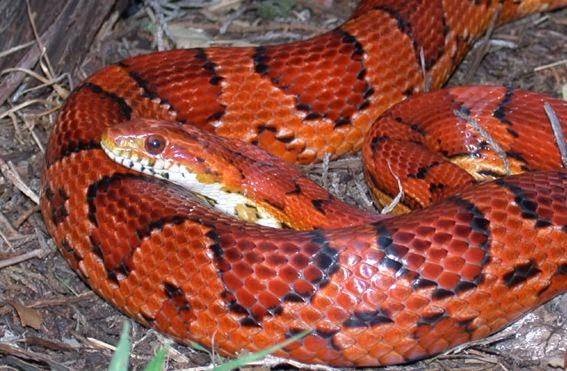
Corn Snake
 Snakes’ tongues do more than taste: They help track prey. Their forked tongues pick up scent molecules that the animal transfers, via specialized ducts in the mouth, to the Jacobson’s organ, which can detect where the scent’s source is located.

Rats and common moles can smell in stereo with independently acting nostrils. Researchers are putting their talents to use in Africa detecting land mines and other explosives.

Up to 40 percent of a shark’s brain is dedicated to sense of smell. No wonder some experts believe they can sniff out prey that’s a third of a mile away in the open ocean.

Parasitic worms also use scent to find hosts. By identifying odors attractive to these parasites, researchers may one day develop traps for worms that pose major health risks.

Sight, not smell, is a raptor’s key sense. Even while diving at speeds of 100 mph or more, falcons can spot prey thanks in part to a reduced number of blood vessels in the retina. Since the vessels scatter light, having fewer of them creates extremely sharp images.

Scallops are no falcons, but some scientists believe they’re able to distinguish between light and dark with as many as 100 eyes on the edge of their mantle. A reflective surface on the back of each eye focuses light onto two retinas to form an image.

“Four-eyed fish,” Anableps anableps, really have just two eyes, but each one is partitioned: The top keeps a lookout for above-surface predators while the bottom watches underwater.

Not only do jumping spiders have eight eyes positioned to create nearly 360-degree vision, but some species can detect ultraviolet radiation, which facilitates mating. (Mood lighting, anyone?)

Worker honeybees navigate using rings of paramagnetic iron oxide in their abdomens that swell or shrink depending on outside magnetic changes, allowing the insects to find their way home by following changes in the Earth’s magnetic fields.

There are five major kingdoms of living things: the kingdom Monera, the kingdom Protista, the kingdom Fungi, the kingdom Plantae, and the kingdom Animalia. The kingdom Animalia has over one million species that share certain characteristics. Most animals fall into this category.

Jewel beetles have sensors that detect infrared radiation from forest fires as far as 50 miles away. The beetles use recently scorched areas for mating. Now that’s putting the “sense” in sensual.

Of these one million species, each of them are completely special.  In 1871, Charles Darwin examined human evolution and sexual selection in The Descent of Man, and Selection in Relation to Sex, followed by The Expression of the Emotions in Man and Animals. His research on plants was published in a series of books, and in his final book, he examined earthworms and their effect on soil. It has been proven that we are all beautiful.


Saturday, April 12, 2014

DRONES


     Drones are UAVs, unmanned aerial vehicles. 


Male Drone Bee
     The dictionary meaning of drone is defined as a male bee only, used for mating purposes, without a sting.  A drone is also defined as a lazy person that doesn’t work, contribute, or give off any sort of energy towards a constructive activity. 

     The man-made aircraft drones are able to fly without a pilot.  Drones usually have a controller on the ground.  These aircraft are superior because the margin for error is cut drastically.  The cost of the aircraft can be cheaper.  Drones don’t need safety paraphernalia for emergency situations when the pilot might have to abort and eject. 

     Not all of the drones are used for the military.  Easily, you could think of another use for a drone.  We could use personal drones to run simple errands, like dropping mail at the post office.

     Aircraft drones have a variety of uses.  Some are super light, and others aren’t far from a real plane.    A large number of UAVs have been loaded with a plethora of surveillance technologies, such as real-time video and thermal imaging technology.  Taking pictures from surreal places and altitudes is a wonderful use (http://www.businessinsider.com/drone-flying-videos-2014-4).  Some other civil applications include:   police missions, firefighting, security work, private surveillance, commercial agriculture, mineral exploration, emergency management operations, etc. 


Personal-use Drone


     A drone eliminates some pilot liabilities, but there is still plenty of room for mechanical issues.  If any situations arise, error would be attributed to mechanical malfunctions.

     Technology also brings cyber issues that weren’t a problem prior to drone flights.  A jogger was in a park running a race and got hit by a hacked drone.  (http://io9.com/athlete-struck-by-potentially-hacked-aerial-drone-1560728218)  Another news headline with drones was about the crash into an elementary school.  Drones could be anywhere, and in the future will be used to carry packages for companies such as AMAZON.com.  Just keep up with the headlines and you’ll see them before you actually see them in the air.  (http://www.nltimes.nl/2014/04/07/ten-drones-intercepted-nss/)

          “As of August 2013, commercial unmanned aerial system licenses were granted on a case-by-case basis, subject to approval by the Federal Aviation Administration (FAA). A Congressional mandate to integrate Unmanned Aircraft Systems into U.S. airspace protocols are forecast to grant FAA licenses more broadly as early as 2015, the agency expecting that five years after it unveils a regulatory framework for UASs weighing 55 pounds or less, there will be 7,500 such devices in the air(http://en.wikipedia.org/wiki/Unmanned_aerial_vehicle).”  Also, it is deemed that DJI Phantom Drones can’t enter no-fly zones. The issue has gone back and forth with the FAA which is attempting to control drone regulations.  An advisory issue in 1981 has remained.  Drones are unable to fly above 400 feet or near airports.
Federal Aviation Administration (USA)


     South Korea suspects that three drones discovered in recent weeks came from North Korea.  They were painted light blue, resembling remote control airplanes, but equipped with scrambling gear to ensure secure airspace.  South Korea’s defense ministry believed the spy drones were from Pyongyang.  South Korea also has their own reconnaissance drone program which includes a deal to buy four Global Hawk UAVs from Northrop Grunman Corp for over $800 million.


Drone crash found in S. Korea.


  There are a variety of drones:


     What is your opinion on drones? 

           “Canada has seen a highly select group of government actors pave the way in setting UAV policy in Canada. Seemingly, though, none of them concern Canadians’ privacy rights. Public privacy bodies, privacy academics, and civil liberties experts are key groups that serve the public interest when it comes to privacy and surveillance technologies. Canadians deserve better. All UAV working groups at the federal level ought to include representatives from the Office of the Privacy Commissioner of Canada at the very least. Ideally, these groups should include members of the scholarly and civil-liberties communities. Failure to include these organizations in policy development will lead to myopic UAV policies that are very likely to infringe upon Canadians’ privacy rights (http://www.ottawacitizen.com/opinion/opd/Canada+needs+privacy+rules+drones/9710176/story.html).”

     A volunteer search and rescue team out of Houston is contacting the FAA to combat their drone restrictions.  The Texas EquuSearch Mounted Search and Recovery Team has retained drone lawyer Brendan Schulman.  The team would like to sue about FAA and airspace regulations on search and rescue drones, Spectra flying wing plane with attached cameras.  Their drones can photograph a square mile in less than 10 minutes.

     UAVs will revolutionize crop management on farms, make package delivery even faster, equip your tech-savvy neighbors with their own personal satellite controlled squadrons of drones, provide for more environmental uses such as flying around after earthquakes and floods to survey damage and look for victims in distress.  In the 2011 tsunami in Japan, damaged nuclear reactor drones flew in to monitor radiation when it was still too dangerous for humans.  In the 2013 typhoon in the Philippines the drones flew lower than helicopters and pilots to survey the damage.  

   
SOCHI 2014 Winter Olympics Drone
  Drones have become the next “thing” in sports professional photography.  During the Winter Olympics in Sochi, drones captured some of the best aerial photography ever seen in ski and snowboarding events.  They are more flexible than cable suspended camera systems.  UAVs began as a gimmick, but will be the constant soon enough.  Remo Masina, sports photography, cited via Associated Press that, “Drones are quieter and cheaper than a manned helicopter, although they can still charge up to $40,000.00.  They also allow the filmmaker to get much closer to his subject.”  A few prototypes are being programmed to follow their skiing subjects automatically from a few feet away.


AMAZON.com Delivery Drone
     Have you caught yourself hearing the UPS or FEDEX driver ever 30 minutes until your beloved package makes the front steps?  Amazon delivery drones will help.  Timed drones are delivering AMAZON packages straight to customer’s doors within 30 minutes of an order being placed.  That is faster than going to the mall.  AMAZON CEO Jeff Bezos, released on 4/12/2014, in a letter to shareholders, that the company has flight-tested several generations of, Prime Air, aerial vehicles.  One expansion with drone delivery will be with fresh food: soups, sodas, chips, jelly, cornbread in a box, and macaroni with cheese. The future is near.


     UAVs aren’t very similar to the dictionary meaning of a drone.  As of this moment, none of them are used to carry pollen and mate.  None of them seem to work efficiently at creating honey, either.   Surveillance drones could be compared to a lazy person that doesn’t work, contribute, or give off any sort of energy towards a constructive activity.  Alternatively, a drone can be exactly what it is programmed to be: FBI informant, university researcher, amateur photographer, or a curious neighbor.


Friday, March 14, 2014

A Dirty House is a good thing?


Has your house ever been too clean?  It has most likely been too dirty, though.  So, where is the fine line between livable dirty and unlivable dirty? 

Maybe your version of livable dirty means if you have to dust you will simply die.  Dust comes from everywhere.  Also, it is difficult to eliminate completely. Thick layers of dust could be a sign that it is time to change a dirty furnace or air conditioner filter.  Vacuum cleaners give off excess dust, too. There are GREEN alternatives to a dusty, loud vacuum cleaner.  Sanding in your living room produces dust, too. Dust can also be introduced into your home through air leaks in ducts, or air infiltration through leaky doors and windows.  A deep cough might not be distracting to everybody.

Well, recently in a study entitled, House dust exposure mediates gut microbiome Lactobacillus enrichment and airway immune defense against allergens and virus infection, Researchers Homer A. Bousheyd and Edward Zorattie, Gastroenterology Pulmonary Critical Care Medicine, University of California, San Francisco, Department of Pathology, University of Michigan, Ann Arbor, explained thoroughly that having a house that is a little bit dirty will help some allergies, especially during early development.

 Lactobacillus johnsonii is a species in the genus Lactobacillus with the type strain ATCC 33200.  This strain protects against allergies.

“Early-life exposure to dogs is protective against allergic disease development, and dog ownership is associated with a distinct milieu of house dust microbial exposures. Here, we show that mice exposed to dog-associated house dust are protected against airway allergen challenge. These animals exhibit reduced Th2 cytokine production, fewer activated T cells, and a distinct gut microbiome composition, highly enriched for Lactobacillus johnsonii, which itself can confer airway protection when orally supplemented as a single species. This study supports the possibility that host–environment interactions that govern allergic or infectious airway disease may be mediated, at least in part, by the impact of environmental exposures on the gastrointestinal microbiome composition and, by extension, its impact on the host immune response (http://www.ncbi.nlm.nih.gov/pubmed/24344318).”

Reduced Th2 cytokine production, or suppression, alleviates allergic inflammation.

“Exposure of animals to dust from homes with dogs attenuates the development of allergen-induced airways disease and serum IgE. (A) Whole-lung mRNA analysis by Q-PCR demonstrates a significant decrease in IL-4 and IL-13 in D dust-supplemented, but not in NP-supplemented animals compared with controls. (B) Accompanying the Th2 cytokine reduction was significantly reduced expression of the mucus-associated gene, gob5. (C) Reduced airway mucus secretion and goblet cell metaplasia is observed in the D dust-supplemented animals, as depicted by PAS staining in lung histology. (D) A reduction in draining lymph node numbers in D dust-supplemented animals was also observed. (E) Serum IgE levels reflected the reduction in the development of the Th2 environment in the D dust-supplemented animals. Data represent the mean ± SE from five mice per group; *P < 0.05 (http://www.ncbi.nlm.nih.gov/pubmed/24344318).”


“Exposure to house dust alters cecal microbiome composition. UniFrac-based cluster analysis of cecal microbiota of control, D dust- and NP dust-supplemented animals reveals distinct microbiota compositions in each treatment group. (B) Phylogenetic tree displaying all taxa that exhibited significant (P < 0.05; q < 0.15) relative enrichment (red bars) or depletion (green bars) in airway-protected mice supplemented with D-associated house dust compared with unprotected control animals. Phyla are indicted by color: Acidobacteria (light blue), Actinobacteria (teal), Bacteriodetes (purple), Firmicutes (green), Proteobacteria (red), and other (orange). Family designation of highly enriched or depleted taxa are indicated (http://www.ncbi.nlm.nih.gov/pubmed/24344318).”


“Compared with unsupplemented control animals, communities supplemented with L. johnsonii or L. johnsonii followed by CRA exposure exhibit the greatest phylogenetic distance (*P < 0.0005, **P < 0.0001, respectively)( http://www.ncbi.nlm.nih.gov/pubmed/24344318).”


“The change in the immune environment observed in these studies may be due directly to the specific supplemented bacterial species, the ancillary species that are enriched because of the presence of the supplemented species, or the depletion of organisms outcompeted in this remodeled assemblage, that differentially program host immune responses. Although the fundamental mechanisms that govern this phenomenon remain unclear, the studies reported here provide proof-of-principle that differential environmental exposures result in GI microbiome remodeling that impacts host immune responses associated with both allergic airway response and respiratory viral infection. Moreover, this study identifies a single GI bacterial species, L. johnsonii, that is pivotal to airway protection, and identifies functional gene pathways in protective microbiota that may be responsible for airway protection. These studies suggest that GI microbiome manipulation represents a promising and efficacious therapeutic strategy to protect individuals against both pulmonary infection and allergic airway disease (http://www.ncbi.nlm.nih.gov/pubmed/24344318).”

Livable dirty isn’t a synonym for nasty, but one piece of dust can contain pet dander, pieces of dead cockroaches, mold spores, dead skin and dust mites.  Both cockroaches and pet dander are common allergy triggers, too. Cockroach waste, saliva, and body parts are a problem in some homes, particularly in the southern U.S.

Keep the stuffed animals, soft toys, and other dust collectors because a little dirty can make you tough.  Let the dog use his natural dusting abilities, and vacuum mouth.  Dust containing the Lactobacillus johnsonii strain serves to protect against allergies.

Monday, February 17, 2014

Technology

     The year is almost 2015.  We aren’t as far into the future as we thought we would be.
     We are all relying on technology to constantly take us to the next level.
     Technology is defined as: the method of applying technical knowledge.
     Our technical knowledge has gone from the invention of the first tape recorder to cellular phones with instant communication capabilities.  
     So, how far into the future could we possibly be from the year 1950?
 
     64 years.
 
     Touchscreens are really functional and cool.  They aren’t as sensitive as scientists contemplated they would be, either.  Initially, inventors said people have dirty habits and the problem of the screen not reacting upon being touched with a dirty hand would simply render the technology to be stupid.  Interestingly enough, touch screens were invented around the year 1950.
     “Touchscreens can be traced to the 1960s. Afterwards, the invention of the light pen allowed for users to input data onto a computer using a stylus. This made it easier to create images on a computer, and as computers became more popular, light pens were increasingly used for graphics design. The first multi-touch interface which could respond to human input was the Flexible Machine Interface, created by the University of Toronto in 1982(http://www.ehow.com/about_6527065_information-touch-screen-technology.html#ixzz2tOkKQjRW).”
     “…smartphones and tablets are creating huge demand. Gyroscope sensors embedded in smartphones allow you to rotate your phone and have your screen turn with it; they pinpoint location, they compensate for tilts when you walk; they even power light and detect pressure movements from your fingers (http://money.msn.com/investment-advice/the-top-tech-investment-of-2014-1).”
     Sensors are a major advancement in technology because they are really simple.  The simplest form of a capacitor consists of two conductors.  Two metal plates are separated by an insulator. If there is a large area on the plate, there is a large capacitance. If there is a small distance on the plate, there is a high capacitance. The insulating material determines the dielectric constant.
     Sony utilized the high level sensor technology in the mobile phone developed by the giant tech company in 2012.  The tech was called Sensor-on-lens touch.  The meant that the number of physical layers in the touch panel were reduced.  The sensor layer is actually part of the lens itself. This gave better image quality.  There was no interference from the touch sensor component.  There was one less layer of glass and one less layer of glue, compared to conventional touch panels. Typically, one would get less haze and about 5% better display luminance without those extra layers.  The sensor-on-lens touch technology made the phone lighter and thinner because an extra glass layer was removed. The image plane was closer to you as a user, making it feel like you were actually touching the image itself. With this direct touch experience, there was less parallax issues compared to a conventional touch panel.  The image and the point of touch were closer together in the sensor-on-lens touch screen technology.
     From the touch screen, technology is advancing our world to another level by other means.
     For example, Metzu is interested in producing not only the smart phone, but also wearable electronics. The Meizu M Watch concept is more of a bracelet than a timepiece, and it comes with a fully flexible 2.4 inch 480 x 640 pixel display, a metal bracelet and a 5 megapixel camera with autofocus.
     Another tech idea is the watch that reports the time and gives odors, simultaneously.  During operation, you’ll experience the smells of paper during documentation. In the evening it will smell of whiskey and tobacco.  At night you will soothe by the smell of chamomile with the addition of melatonin.
     Engineers and designers often draw inspiration from nature.   This vehicle is an example.  It is a sub, the Honda USS-299.  It is not a drug runner.  The source of inspiration to the designer was the stingray. Not everyone feel like that fish is attractive.  As a model for the submarine, though,  it fits very well.  Nature knows exactly what should be the form of a machine designed to travel at great depths.  The inventors are out to impress Honda not the consumer.  Not yet, at least.
Honda USS 299, civilian submarine
     Other future tech ranges from biotic games, to new drones, and glass marketing.  The really exotic ideas are underneath reinforced barriers unseen by any abnormally curious eyeballs.
    
     It is almost 2015.  We aren’t as far into the future as we thought we would be.
     Perhaps relying on technology, to take us to the next level, is “new” technology.
     How much would you pay for a car that drives on its own?  
 
     That would be 2015-ish.