Showing posts with label biology. Show all posts

Sunday, February 9, 2025

Symbiosis: Nature’s Collaborative Masterpiece


     Symbiosis, the intimate relationship between different species, is one of nature’s most fascinating and ingenious strategies for survival. From the depths of the ocean to the cells within our bodies, symbiotic relationships are everywhere, shaping ecosystems and driving evolution. These partnerships, often mutually beneficial, highlight the interconnectedness of life and reveal how cooperation can be as powerful as competition. In this article, we’ll explore some of the most remarkable examples of symbiosis, from the microscopic world of cyanobacteria and protists to the visible alliances between anglerfish and bacteria, clownfish and sea anemones, and even humans and gut bacteria. By understanding these relationships, we gain a deeper appreciation for the complexity and beauty of life on Earth.

     One of the most profound examples of symbiosis is the relationship between cyanobacteria and protists. Cyanobacteria, often referred to as blue-green algae, are ancient microorganisms capable of photosynthesis and nitrogen fixation. When cyanobacteria formed an endosymbiotic relationship with protists—single-celled eukaryotic organisms—it led to one of the most significant evolutionary events in Earth’s history.  

     In this relationship, cyanobacteria were engulfed by protists but instead of being digested, they became permanent residents within the host cell. Over time, these cyanobacteria evolved into chloroplasts, the organelles responsible for photosynthesis in plants. This endosymbiotic event not only allowed protists to harness sunlight for energy but also laid the foundation for the evolution of all photosynthetic plants. As one biology blog explains, “This symbiotic relationship is considered a key evolutionary event, as it is believed that the chloroplasts found in plants originated from an ancient endosymbiotic event where a cyanobacterium was engulfed by a eukaryotic protist ancestor.”  

     The benefits of this partnership are immense. Cyanobacteria provide protists with oxygen and nutrients through photosynthesis, while the protist offers a protected environment. Additionally, some cyanobacteria can fix atmospheric nitrogen, converting it into a form that the host can use, which is particularly advantageous in nitrogen-poor environments. This relationship has contributed to the incredible diversity of photosynthetic protists, including many types of algae, which play a crucial role in aquatic ecosystems.

     In the dark depths of the ocean, where sunlight cannot penetrate, the anglerfish has evolved a unique way to attract prey: bioluminescence. This remarkable ability is made possible by a symbiotic relationship with bioluminescent bacteria. These bacteria reside in the anglerfish’s lure, a specialized organ that dangles from its head like a fishing rod.  Smithsonian
     The bacteria produce light through a chemical reaction, creating a glowing lure that attracts unsuspecting prey. In return, the bacteria receive a safe habitat and nutrients from the anglerfish. This partnership is a perfect example of mutualism, where both parties benefit. As one researcher noted, “The anglerfish’s bioluminescent lure is a stunning example of how symbiosis can drive evolutionary innovation, allowing species to thrive in even the most challenging environments.”

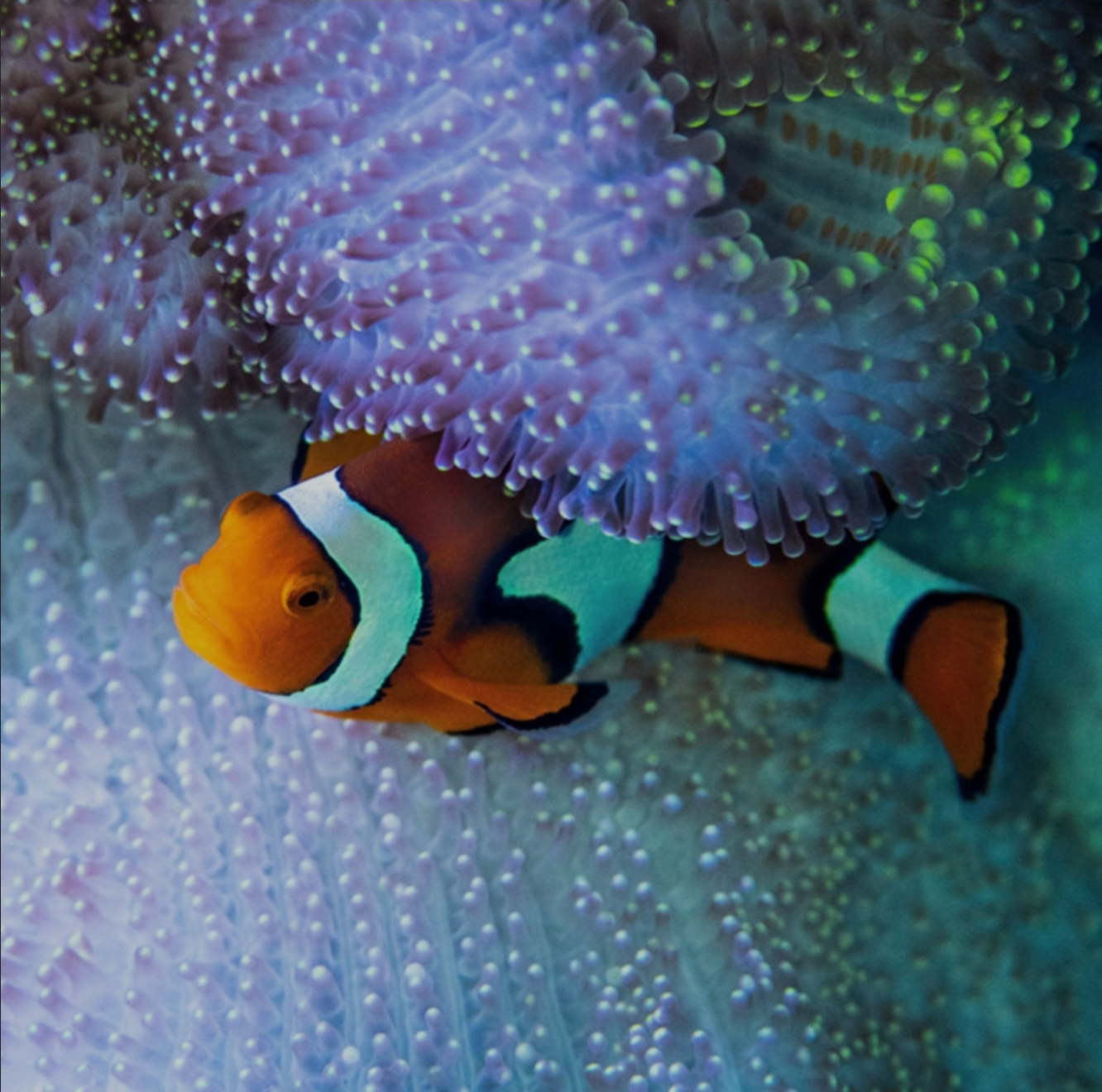
     The vibrant relationship between clownfish and sea anemones is another iconic example of symbiosis. Clownfish, with their bright orange and white stripes, live among the venomous tentacles of sea anemones, which provide protection from predators. The anemone’s stinging cells, which would harm most other fish, do not affect the clownfish due to a protective mucus layer on their skin.  

     In return, clownfish help the anemone by eating leftover food particles and parasites, and their waste provides nutrients for the anemone. This mutualistic relationship ensures the survival of both species in the competitive coral reef environment. As marine biologists have observed, “The clownfish and sea anemone partnership is a beautiful demonstration of how two species can evolve to depend on each other for survival.”  

     Termites are known for their ability to break down cellulose, the tough material found in wood. However, termites cannot digest cellulose on their own. Instead, they rely on a complex symbiotic relationship with bacteria and protozoa living in their guts. These microorganisms produce enzymes that break down cellulose into simpler sugars, which the termites can then absorb and use for energy.  

     This relationship is a testament to the power of teamwork in nature. Without their bacterial partners, termites would be unable to access the nutrients locked in wood, and their role as decomposers in ecosystems would be severely limited. As one study notes, “The termite gut is a microcosm of symbiosis, where bacteria and protozoa work together to perform a task that neither could accomplish alone.”

     Even humans are part of the web of symbiotic relationships. Our gut is home to trillions of bacteria, collectively known as the gut microbiota, which play a crucial role in digestion, immune function, and overall health. One of the most well-known groups of gut bacteria is Lactobacillus, which helps break down food, produce vitamins, and protect against harmful pathogens.  

     In return, these bacteria receive a steady supply of nutrients and a stable environment to thrive. This symbiotic relationship is so vital that disruptions to the gut microbiota have been linked to various health issues, including digestive disorders, obesity, and even mental health conditions. As scientists have discovered, “The human gut microbiota is a prime example of how symbiosis shapes our biology, influencing everything from metabolism to mood.”

     Symbiosis is a testament to the power of collaboration in nature. From the microscopic world of cyanobacteria and protists to the glowing partnership between anglerfish and bacteria, these relationships reveal how life on Earth is deeply interconnected. Each example of symbiosis highlights the ingenuity of evolution, demonstrating how species can adapt and thrive by working together.  Scientific American 

     As we continue to study these relationships, we gain not only a deeper understanding of biology but also valuable insights into how we can address challenges in medicine, agriculture, and environmental conservation. Symbiosis reminds us that cooperation is a fundamental principle of life, and by embracing this principle, we can unlock new possibilities for the future.

     By exploring the wonders of symbiosis, we are reminded of the beauty and resilience of life, and the endless possibilities that arise when we work together.

Monday, July 30, 2018

ATP- biological currency

(https://www.britannica.com/science/cellular-crespiration)

     Have you every found yourself completely drained of every ounce of energy?  You needed a healthy snack.  

     We can stay energized and keep our bodies energized. Cellular respiration yields ATP.

   Cellular respiration is important because it provides the energy for living organisms to perform all of the other necessary functions to maintain life.  Our energy currency is ATP.  

     How is ATP made?

     ATP is composed of Adenosine tri-phosphate-
a compound consisting of an adenosine molecule bonded to three phosphate groups, present in all living tissue. The breakage of one phosphate linkage (to form adenosine diphosphateADP ) provides energy for physiological processes such as muscular contraction.

     ATP is composed of Adenosine-
Adenosine is a nucleoside that is composed of Ademine and D-ribose. Adenosine derivatives play many important biological roles in addition to being components of DNA and RNA. Adenosine is a neurotransmitter.

     ATP contain Phosphate.  A phosphate can be grouped as any of numerous chemical compounds related to phosphoric acid (H3PO4). One group of these derivatives is composed of salts containing the phosphate ion (PO43−), the hydrogen phosphate ion (HPO42−), or the dihydrogen phosphate ion (H2PO4−), and positively charged ions such as those of sodium or calcium. A second group is composed of esters, in which the hydrogen atoms of phosphoric acid have been replaced by organic combining groups such as ethyl (C2H5), or phenyl (C6H5).

     Energy is formed through an ATP reaction. 

     ATP Hydrolysis-
Adenosine triphosphate is composed of the nitrogenous base adenine, the five-carbon sugar ribose, and three phosphate groups.ATP is hydrolyzed to ADP in the reaction ATP+H2O→ADP+Pi+ free energy.  The calculated ∆G for the hydrolysis of 1 mole of ATP is -57 kJ/mol.ADP is combined with a phosphate to form ATP in the reaction ADP+Pi+free energy→ATP+H2O.The energy released from the hydrolysis of ATP into ADP is used to perform cellular work, usually by coupling the exergonic reaction of ATP hydrolysis with endergonic reactions.Sodium-potassium pumps use the energy derived from exergonic ATP hydrolysis to pump sodium and potassium ions across the cell membrane while phosphorylation drives the endergonic reaction.

     Cellular respiration is supported by several key reactions:

Tricarboxylic acid cycle
Glycolysis
Aerobic oxidation
Glyoxylate cycle
Reductive tricarboxylic acid cycle
Pasteur effect
Energy flow
Catabolism

     The Human body goes through thousands of bodily processes, a day.

     Cellular respiration is vital.  This biological pathway provides the energy for humanity to perform all of the necessary functions to cellular life.

     Our energy currency is ATP.

Tuesday, April 17, 2018

Diphenylamine, apple pesticide

     Go to your nearest edible supplier. Pick up an apple.  What is the powder substance on the sides?  It is a pesticide, which slows down produce mold.  A popular pesticide is diphenylamine.

     Diphenylamine (DPA)-

(Information origination-
Reregistration Eligibility Decision (RED) document fact sheet case 2210, United States Prevention, Pesticides EPA-738-F-97-010 Environmental Protection And Toxic Substances April 1998 Agency (7508W))

     Diphenylamine (DPA) is a plant growth regulator used post-harvest to control storage scald on apples. It is mainly used for its antioxidant properties. As a pesticide, DPA is used for destroying insects or other organisms harmful to cultivated plants.  DPA has been classified as an indoor food use.

     Storage scald- term loosely applied to a group of skin disorders of apples and pears. It involves brown or gray discoloration of irregularly shaped areas on the surface of the fruit during or following storage (http://postharvest.tfrec.wsu.edu/pages/N6I2C)

Chemical formula- C12H11N

Molar Mass- 169.23 g/mol

Appearance- White, tan, amber, or brown crystals

Odor- pleasant, floral

Density- 1.2 g/cm3

Melting point- 53 °C (127 °F; 326 K)

Boiling point- 302 °C (576 °F; 575 K)

Solubility in water- 0.03%

Vapor pressure- 1 mmHg (108°C)

Acidity (pka)- 0.79

Magnetic susceptibility- -109.7·10−6 cm3/mol

     Formulations include an emulsifiable concentrate, a wettable powder, a soluble concentrate/liquid and a ready-to-use liquid.   DPA is applied by dipping, drenching or spraying.  It was pesticide registered in 1947.

     DPA has been shown to be slightly toxic by the oral, dermal, and inhalation routes and has been placed in Toxicity Category III (second lowest of four categories) for these effects.  The dietary intake cancer risk for diphenylnitrosamine is 2.8 x 10 mg/kg/day.

     DPA is of low acute toxicity and has been classified as “Not Likely“ as a human carcinogen. An impurity of DPA,
diphenylnitrosamine, is classified as a “probable human carcinogen”, however the cancer risks for dietary intake and worker exposure fall below the Agency’s level of concern. Food crop use consist of post-harvest use on apples. Dietary exposure to DPA residues in foods is within acceptable limits.

     Since this is considered an indoor food end-use chemical, only hydrolysis data are required. Available data indicate that DPA is stable towards hydrolysis at pH’s 5, 7, and 9. DPA has a moderate solubility in water (39.4 ppm), a relatively high octanol/water partition coefficient (K =3,860), and a high vapor pressure (6.39 x 10 torr). The high rate of ow
-4 aqueous photolysis and the susceptibility of the chemical in aerobic environments indicate that if DPA were to reach surface waters, it would be short lived.

     DPA is moderately toxic to fish and aquatic invertebrates. It is practically non-toxic to avian species on an acute and subacute basis.

     Industrial handling of Diphenylamine- 

     The Agency develops any mitigation measures or regulatory controls needed to effectively reduce each pesticide's risks. EPA then reregisters pesticides that meet the safety standard of the FQPA and can be used without posing unreasonable risks to human health or the environment. When a pesticide is eligible for reregistration, EPA explains the basis for its decision in a Reregistration Eligibility Decision (RED) document. These facts are summarized from the RED document for reregistration case 2210, diphenylamine.

Friday, January 26, 2018

Zika Virus update

1. Effective-

In both cell cultures and mouse models, a drug used to treat Hepatitis C effectively protected and rescued neural cells infected by the Zika virus -- and blocked transmission of the virus to mouse fetuses.

Cell culture-
refers to the removal of cells from an animal or plant and their subsequent growth in a favorable artificial environment.

Mouse models-
mice naturally develop conditions that mimic human disease conditions, so inbred laboratory mice have been used as model organisms to study the virus.

2. Useage-

Researcherssay their findings support further investigation of using the repurposed drug as a potential treatment for Zika-infected adults, including pregnant women.

3. Explanation-

Research took place in the Muotri Lab, University of California San Diego, 9500 Gilman Dr, La Jolla, CA 92093.

Goal: a cure for the zika virus.

    
     "The team investigated an antiviral drug called sofosbuvir, approved and marketed under the brand name Sovaldi to treat and cure hepatitis C infections.  The drug works by inhibiting replication of the hepatitis C virus. Researchers noted that both hepatitis C and Zika belong to the same viral family and bore strong structural similarities that could make sofosbuvir effective against the latter. In addition, it had been reported that sofosbuvir was protective against Zika in different cell types (https://www.sciencedaily.com/releases/2018/01/180125135529.htm)."

Zika vs. Sofosbuvir-

a.  rescued dying NPCs infected with the Zika

b.  restored gene expression linked to their antiviral response

c.  arrested Zika replication in vivo

d.  stopped flow from mother to fetus

e.  the drug was well-tolerated by the Zika-infected pregnant mice

     "In subsequent tests using an immunodeficient mouse model infected by Zika, intravenous injections of sofosbuvir significantly reduced viral loads in blood serum compared to a placebo group. Moreover, fetuses of Zika-infected pregnant mice did not show detectable Zika virus amplification in the sofosbuvir-treated group."
 http://ucsdnews.ucsd.edu/pressrelease/repurposed_drug_found_to_be_effective_against_zika_virus

More research needs to be done, but we are approaching the effective cure of the Zika virus.

Tuesday, August 22, 2017

Innate Immunity and Immune System Infection

     The immune system is our internal defense.

     There are many potentially dangerous viruses, bacteria, and other pathogens. They occur in the air, in the food, and in the water. There are also cells that abnormally develop into cancer. Our immune system has developed two types of defense against these threats. They are innate immunity and acquired immunity. 

     Let's look at innate immunity.

     Innate immunity is the kind of defense that is mediated by phagocytic (uptake) cells, antimicrobial proteins, the inflammatory response, and natural killer (eliminates tumors and viruses) cells. It is present before exposure to pathogens and is effective from the time of birth.

     The first lines of defense are the external defenses.  Intact skin and mucous membranes form physical barriers that bar the entry of microorganisms and viruses. Mucus produced by cells in these membranes, the low pH (acidic ranging from 3-5) of the skin and stomach, and degradation by lysozyme (emzyme that digests bacterial cell walls) also deter infection by pathogens.

     The second lines of defenses are the internal cellular and chemical defenses. Phagocytic cells (white blood cells) injest microbes that penetrate external innate defenses and help trigger an inflammatory response. Phagocytes attach to their prey via surface receptors that bind to certain structures found on many microorganisms, but not on normal body cells.  Complement proteins, interferons, and other antimicrobial proteins also act against invading microbes. In local inflammation, histamine and other chemicals released from injured cells promote changes in blood vessels that allow fluid, more phagocytes, and antimicrobial proteins to enter the tissues. Although heat and swelling are uncomfortable sensations, the enhanced blood flow and vessel permeability that cause them are critical to innate defense.  Natural killer cells induce the death of virus-infected cancer cells via apoptosis (programmed cell death).

     Invertebrate immune mechanisms are present, also.  Insects defend themselves by mechanisms similar in many respects to vertebrate innate defenses. The insect equivalent to blood, the hemolymph, contains circulating cells called hemocytes. Antimicrobial peptides and phenolooxidase are insect innate immune defenses.

     Defenses in vertebrates can be divided into innate and acquired immunity. If an invading pathogen reaches the body's external innate defenses, various internal innate defenses quickly come into play. The defenses provided by acquired immunity against specific pathogens develop more slowly. Some components of innate immunity also function in acquired immunity.

Wednesday, April 5, 2017

The Cell Cycle

     Cell cycle- (http://www.medicinenet.com/script/main/mobileart.asp?articlekey=7107)

     A cell is the basic unit of life.

     How do we make new cells?

     A cell is a microscopic structure containing nuclear and cytoplasmic material enclosed by a semipermeable membrane and, in plants, a cell wall; the basic structural unit of all organisms.  We have prokaryotic cells and eukaryotic cells.

     A prokaryotic cell possesses a simple structure with no nuclear envelope and usually a single circular chromosome. A eukaryotic cell possesses a more complex structure, with a nucleus and multiple linear chromosomes consisting of DNA complexed to histone proteins.

     Cell reproduction requires a copy of the genetic material, separation of the copy, and cell division. In a prokaryotic cell, the single chromosome replicates, each copy moves toward opposite sides of the cell, and the cell divides. In eukaryotic cells, reproduction requires mitosis and meiosis to ensure that a complete set of genetic information is transferred to each new cell.  In eukaryotic cells, chromosomes are typically found in homologous pairs.

     Functional chromosomes consist of a centromeres, telomeres, and multiple origins of replication. The centromere is the point at which the kinetochore assembles and to which microtubules attach.  Telomeres are the stable ends of chromosomes.  After a chromosome is copied, the two copies remain attached to the centromere, forming sister chromatids.

     The cell cycle consists of the stages through which a eukaryotic cell passes between cell divisions.  It consists of:  G-subzero, Interphase, G-subone, A-phase, G-subtwo, M-phase, Prophase, Prometaphase, Metaphase, Anaphase, Telophase, and Cytokinesis.

     "The cell cycle governs the entire life of a cell, including growth, division and death. There are defined phases of the cell cycle, during which the cell grows, duplicates its DNA and eventually divides into two new cells (http://sciencing.com/cell-cycle-20206.html)."

     At the end of the cell cycle the chromosomes line up in the center of the cell.  Sister chromatids separate and become independent chromosomes, which then migrate to opposite ends of the cell.  The nuclear membrane reforms around chromosomes at each end of the cell, and the cytoplasm divides.

     Mitosis results in the production of two genetically identical cells. Progression through the cell cycle is controlled by interactions between cyclins and cyclin-dependent kinases.

     Sexual reproduction produces genetically variable progeny and allows for accelerated evolution.  It includes meiosis, in which haploid sex cells are produced, and fertilization, the fusion of sex cells.

     The major events of meiosis include: Meiosis one, Prophase one, Metaphase one, Anaphase one, Telophase one, Cytokinesis, Meiosis two, Prophase two, Metaphase two, Anaphase two, Telophase two, and Cytokinesis.

     Genetic variation in meiosis is produced by crossing over and by the random distribution of maternal and paternal chromosomes.  The result of meiosis is the production of four haploid cells that are genetically variable.

     "Genetic variation can refer to differences between individuals or to differences between populations. Mutation is the ultimate source of genetic variation, but mechanisms such as sexual reproduction and genetic drift contribute to it as well (https://geneed.nlm.nih.gov/topic_subtopic.php?tid=48&sid=50)."

     Grasping mitosis and meiosis requires more than simply memorizing the sequence events that take place in each stage, although these events are important.  The key is to understand how genetic information is apportioned in the course of cell reproduction through a dynamic interplay of DNA synthesis, chromosome movement, and cell division.  These processes bring about the transmission of genetic information and are the basis of similarities and differences between parents and progeny.

Wednesday, December 18, 2013

Transcranial Random Noise Stimulation (tRNS)

     In 2007, Roi Cohen Kadosh, at the University of Oxford and his colleagues, was researching the brain in ebb attempt to uncover cognitive learning.  They found that  the area of the brain responsible for mathematics is the right parietal lobe.  It is located just above the right ear.
     There are two separate parietal lobes. One involves sensation and perception.   The other lobe is responsible for integrating sensory input, primarily with the visual system. The first function integrates sensory information to form a single perception which is simply called cognition. The second function constructs a spatial coordinate system to represent the world around us.


     "Individuals with damage to the parietal lobes often show striking deficits, such as abnormalities in body image and spatial relations (Kandel, Schwartz & Jessel, 1991)."
     Also in 2007, Roi Cohen Kadosh, at the University of Oxford, and his team "short-circuited" this area using transcranial magnetic stimulation (TMS).   TMS is  a stream of magnetic pulses which temporarily disables a targeted area of the brain. The result is that some of the subjects' ability to perform numerical tasks fell.
     "In fact, their performance resembled people with dyscalculia, who have difficulty comprehending mathematics" (http://www.newscientist.com/article/mg21729085.400-zapping-brain-to-improve-learning-comes-at-a-cost.html).
   Noninvasive transcranial stimulation techniques like repetitive transcranial magnetic stimulation (rTMS) and direct current stimulation (tDCS) have been used to induce neuroplastic-like effects in the human cortex, leading to the activity-dependent modification of synaptic transmission. They introduced a novel method of electrical stimulation: transcranial random noise stimulation (tRNS), whereby a random electrical oscillation spectrum is applied over the motor cortex. tRNS induces consistent excitability increases lasting 60 min after stimulation. These effects have been observed in 80 subjects through both physiological measures and behavioral tasks. Higher frequencies (100–640 Hz), sounds at the range of a vibrating tuning fork, appear to be responsible for generating this excitability increase.  This effect may be attributed to the repeated opening of Na+ channels. In terms of efficacy tRNS appears to possess at least the same therapeutic potential as rTMS/tDCS in diseases such as depression, while furthermore avoiding the constraint of current flow direction sensitivity characteristic of tDCS(http://m.jneurosci.org/content/28/52/14147.short).

 
     Sodium, Na+, channels channels are made up of a single polypeptide with four homologous domains. Each domain contains 6 membrane spanning alpha helices. One of these helices, S4, is the voltage sensing helix.  It has many positive charges. A high positive charge outside the cell repels the helix.  This keeps the channel closed. Depolarization of the cell interior causes the helix to move, inducing a conformational change.  The ions will then flow through the channel while it is open (http://pharmaxchange.info/press/2011/02/voltage-sensor-in-the-voltage-gated-sodium-and-potassium-channels/).

     Recently, researchers found out that students performed better at math after using this same brain stimulation.  The students could crunch numbers involving the basic fact that an equation in one variable in a statement in which two expressions, at least one containing the variable, are equal.


     Math is a highly complex cognitive faculty that is based on a myriad of different abilities," Cohen Kadosh said. "If we can enhance mathematics . . . there is a good chance that we will be able to enhance simpler cognitive functions."

     First, second, and third degree polynomial equations are widely used at parent companies, like Microsoft, to model manufacturing processes and product design features based on measurements made on factories and testing labs.  This small brain shock could lead to huge intelligence increases in a wide variety of fields.

     "The researcher said that if future experiments with TRNS continue to show positive results, the technique could be used in clinics, classrooms and even at home to help people who struggle with particular cognitive tasks."

     "This could include anyone from a child falling behind in . . . math class to an elderly patient suffering from neurodegenerative disease," he said.